

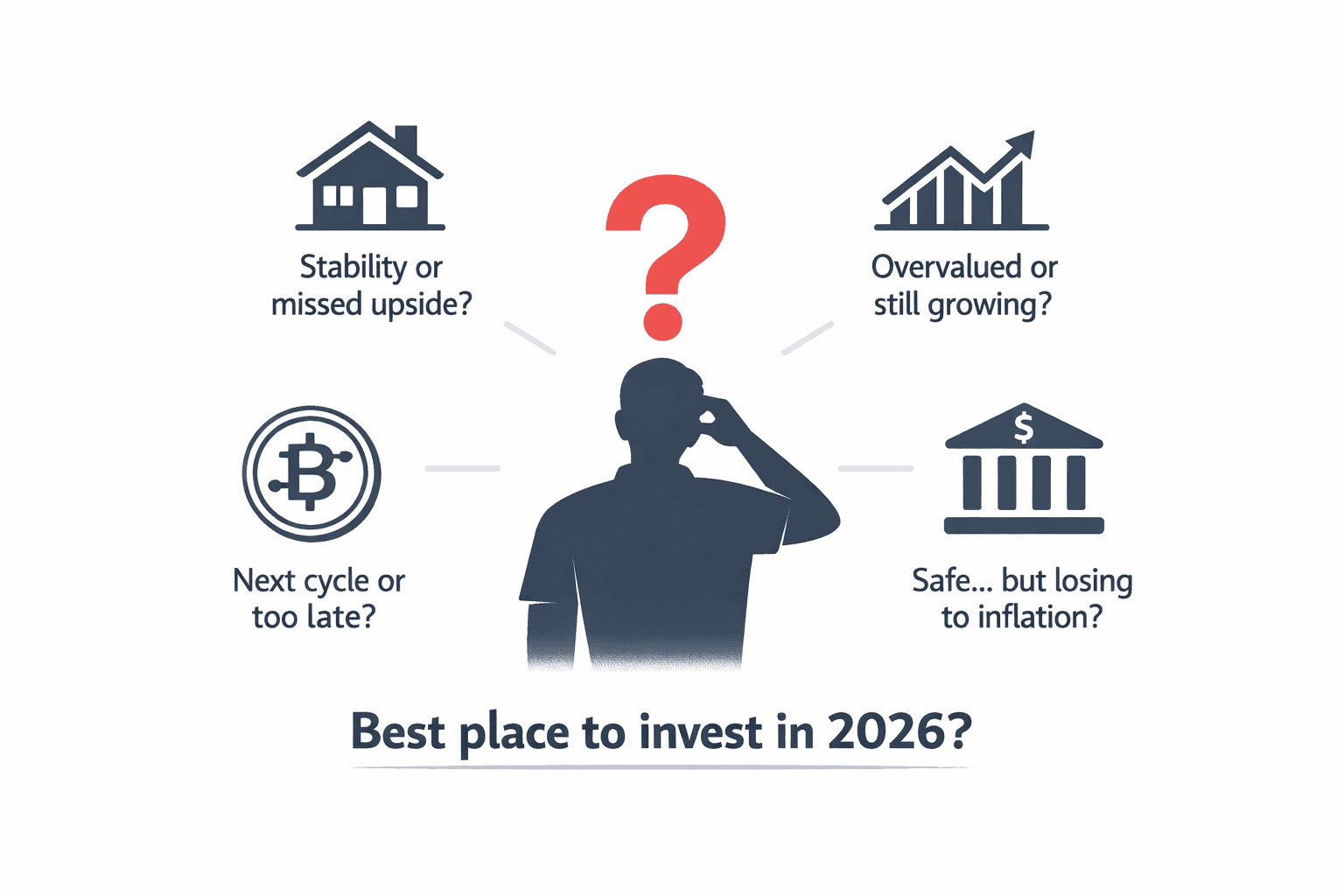
Best Places to Invest Your Money in 2026 (And Actually See It Grow)
If you’ve got some cash sitting around and you’re wondering what to do with it this year, you’re not alone. It’s a question I think about constantly. Not just for myself, but for the community I invest alongside every month.
The truth is, there’s no single “right” answer. But there are better answers and worse answers depending on what you’re optimizing for. Do you want growth? Stability? Cash flow? The ability to sleep at night without checking your phone every three hours?
I’ve spent years testing different approaches, watching what works, and being honest about what doesn’t. Here’s my take on the most common places people park their money in 2026 (and what I actually do with mine.)
For most people, investing means stocks. And that makes sense. The stock market has a long track record of growth, it’s easy to access through any brokerage app, and you can start with almost any amount of money.
But here’s the thing about stocks: you’re a passenger, not a driver. When the market goes up, your portfolio goes up. When the market tanks, you watch your net worth shrink and there’s not much you can do about it except wait and hope it recovers.
For some people, that’s fine. They’ve got decades ahead of them and the stomach and patience to play the long game. For others, especially those who’ve worked hard to accumulate some savings and don’t love the idea of watching it evaporate during a correction.
Stocks are a solid piece of most portfolios. I invest in index funds myself, every week on autopilot.
But if you put all your eggs in that basket, you leave yourself exposed to market crashes when you can’t — or at least shouldn’t — sell.
Sure, stock indexes have always rebounded over the long term. But “long term” can feel pretty cold when you’re staring at a 30% drawdown and wondering how many years the market will take to recover.
Some people have made life-changing money in crypto. That’s a fact. It’s also a fact that most people have lost everything. High volatility, higher blood pressure.
The challenge with crypto is that it’s almost impossible to value fundamentally. With a stock, you can look at earnings, revenue, assets, and make some informed estimate of what it’s worth. With most cryptocurrencies, you’re essentially betting on adoption, sentiment, and momentum which can turn after a tweet from a public figure.
If you’re the type of person who can buy something, watch it drop 50%, and genuinely not care because you’re “HODLing” for the long game, crypto might have a (small) place in your portfolio. But if you’re the type who checks prices at 2am and feels a knot in your stomach when things go red, you can expect plenty of sleepless nights.
I’m not anti-crypto. I’m just honest about what it is. It’s a speculative asset that could go to the moon or to zero, and nobody really knows which (or when). For money you can afford to lose, maybe. For money you’re counting on to build your future, I’d think twice.
This one hurts to write because savings accounts feel safe. Your money is insured. It’s sitting right there in your bank. Nothing bad can happen to it.
Except something bad is happening to it every single day. It’s called inflation.
If your savings account is paying you 2% interest and inflation is running at 3%, you’re not making money. You’re losing it. Just slowly enough that it doesn’t feel like a loss. It’s like a leak in your roof that you don’t notice until the ceiling caves in.
Savings accounts are great for emergency funds and short-term needs. But as a place to park money you’re hoping will grow? The math simply doesn’t work. You’re treading water at best, and more likely you’re slowly sinking.
When most people think about investing in real estate, they picture buying a rental property. Maybe a duplex, or a single-family home they can rent out. It sounds appealing. You own a real asset, someone else pays your mortgage, and eventually you’ve got equity and cash flow.
The reality is often messier.
First, there’s the upfront cost. In most markets, you’re looking at a down payment of $50,000 to $100,000 or more, plus closing costs, plus reserves for repairs and vacancies. That’s a significant chunk of capital before you’ve collected a single rent check.
Then there’s the ongoing work. Being a landlord isn’t passive. Tenants call at inconvenient times. Things break. People pay late, or don’t pay at all. You’re dealing with property managers, contractors, accountants, and the occasional nightmare scenario that makes you question why you ever thought this was a good idea.
But for busy professionals with demanding careers and limited bandwidth, landlording feels less like investing and more like taking on a side hustle. You’re not really putting your money to work. You’re putting yourself to work, and your money comes along for the ride.